 By SRTeam
 Adults who play tennis while traveling in Europe usually face a familiar choice. Some trips revolve around large resort programs with fixed group sessions. Others put one player on court with a private coach and a plan built around individual goals.
Prague has become a practical base for the second format. A private, assessment-led camp there serves adults who already rally and want focused technical work during a short stay. It is a coaching trip organized around one player, not a generic group holiday with a set weekly timetable.
When evaluating European travel options, travelers should weigh high-volume group formats against diagnostic private coaching. The two models organize time, attention, and cost very differently. Understanding those differences helps you book the trip that matches your level, your calendar, and what you actually want to improve.
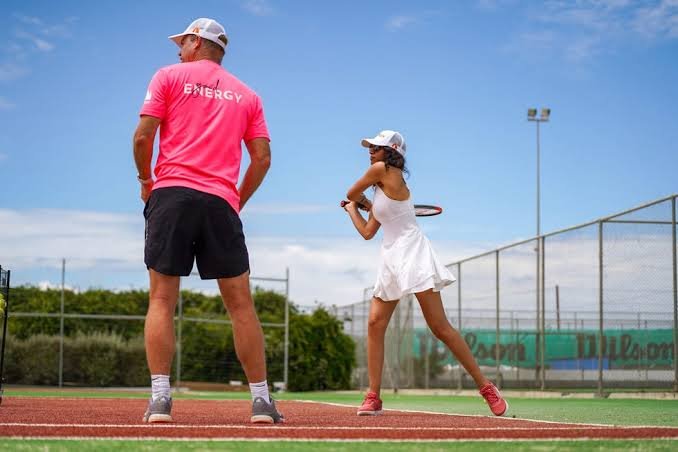
Rethinking the Adult Tennis Vacation in Europe
Most adult tennis holidays follow a resort pattern. You register, join a group of mixed levels, and rotate through drills designed for a crowd. That model works well for social energy and court volume, but it rarely addresses one player’s specific habits.
An assessment-led camp flips the structure. The coach watches how you hit, how you move, and how you decide before suggesting a single change. Sessions then follow those priorities instead of a generic weekly curriculum.
This matters most for players who can already sustain rallies. They do not need stroke introductions or beginner drills. They need diagnosis, targeted repetition, and candid feedback while the ball is live.
Why a Short Private Coaching Camp in Prague Works
Short stays suit travelers with limited vacation time. The plan is built around your dates and goals, so sessions fit around flights, meetings, and city plans. Prague is compact, and its training courts sit in districts that are easy to reach.
Coaching and consultation are available in English, Czech, and Ukrainian. Visiting players can discuss technique and tactics without a language barrier slowing the conversation down.
Solo travelers gain the most from the one-to-one format. You do not need to bring a playing partner or find a group to get meaningful court time. The coach supplies the pace, the drills, and the match situations, so an empty travel calendar is not an obstacle.
A short camp also keeps the rest of your trip intact. You can train in the morning and enjoy the city afterward, rather than surrendering the week to a fixed program schedule.
Comparing Group Resorts and Private Coaching Camps
When evaluating European travel options, players looking for the best tennis camp holidays for adults should weigh large group resort formats against diagnostic private coaching. The gap shows up in scheduling, feedback quality, and how each format handles money.
| Typical group resort program | Private assessment-led camp in Prague | |
|---|---|---|
| Format | Scheduled group sessions with mixed levels | One-to-one work with a single coach |
| Timetable | Fixed blocks published in advance | Built around your dates and goals |
| Starting point | Standard drill progression | 90-minute technical assessment |
| Feedback | Shared across the group | Directed at one player’s habits |
| Coach rotation | Sessions may rotate between staff | Coaching stays with Leonard Stakhovsky |
| Take-home output | Varies by program | Written plan of priorities |
| Price | Package total | Written quote after goals, dates, and hours |
Group programs can deliver high court volume and a lively social atmosphere. A private intensive trades some of that volume for diagnosis, individual correction, and a plan you can carry home. Neither format is wrong; they simply serve different expectations.
Think about what you want from the week. If your goal is company and court time, a resort format delivers. If your goal is to understand why a shot breaks down under pressure, private assessment-led work is the more direct route.
Who Benefits Most from Assessment-Led Coaching
The format suits several adult profiles. League players preparing for a season, club players stuck on a plateau, and returning players rebuilding habits after a break all fit. Solo travelers who want structured court time fit naturally as well.
It also suits players visiting Prague for other reasons. They can add focused coaching to a city trip without committing to an extended camp.
Honest fit matters before you book. This camp is designed for players who can already rally. It is not a program for complete beginners, and it is not a bundled resort holiday with evening entertainment and organized excursions.
If you are unsure where you stand, say so in your enquiry. The assessment exists precisely to establish that baseline before any training plan is written.
The Training Format: From Assessment to Take-Home Strategy
Every new court client starts with a 90-minute assessment. The coach reviews strokes, movement, and decision-making, then agrees priorities with you. That session sets the direction for everything that follows.
Focused private sessions come next, working through those priorities in order. Technical adjustments are repeated until they hold together, then tested in points and match situations. Testing is where old habits reveal themselves.
The camp closes with a written plan of priorities. You leave with specific things to practise at home, so the work continues after the trip rather than fading on the flight back.
Technical and Tactical Focus Areas on Court
Sessions can cover whatever the assessment surfaces. Possible focus areas include serve and return patterns, movement between shots, rally structure, and shot selection in points. Which of these matters depends entirely on what the coach sees on court.
Tactical work usually follows the technical side. Players rehearse patterns under score pressure, then review what held up and what broke down. That review is often more instructive than the drill itself.
Nothing here is presented as a promised outcome. The practical value lies in clearer priorities and better-directed practice, both during the camp and in the weeks that follow it.
Longer visits widen the field of work. With more hours available, players can address a second or third priority instead of forcing everything into a short window.
Sample Three-Day Training Schedule
Camps start from three days, which keeps the trip compact. A week or a longer visit gives more time to test changes against fatigue and real points. The exact plan is agreed before booking, based on your goals and available hours.
The outline below shows how a three-day visit can be organized. Treat it as a shape rather than a fixed itinerary.
| Day | Focus |
|---|---|
| Day 1 | Assessment and priorities |
| Day 2 | Technical change and repetition |
| Day 3 | Match application and written take-home plan |
Extra days add repetition and testing. That additional time is useful when you want to confirm that a new pattern survives a full match rather than a single drill.
Meet the Head Coach: Leonard Stakhovsky
Leonard Stakhovsky founded the practice and works as its head coach. He is a former ATP player and an NCAA Division I athlete. Those two levels of experience shape how he reads adult recreational games.
He leads the sessions personally. Players work with one coach throughout the camp, which keeps feedback consistent from assessment to the final written plan.
Court Locations and Facilities in Prague
Training takes place on courts across Prague: TK Spoje, Hodkovicky, and CLTK, located in Prague 3, 4, and 7. Which venue suits your dates is confirmed during planning.
Court access and surfaces are confirmed for specific dates before you travel. You therefore know where sessions happen and what to expect underfoot well before departure.
If surface matters to your preparation, raise it early. The venue discussion happens before anything is booked on your side.
Planning Your Travel and Logistics
Most visitors fly into Prague Václav Havel Airport. From there, the city center and the training districts are straightforward to reach by public transport or taxi.
Agree dates, hours, and venue before booking flights. Confirming the coaching schedule first prevents clashes with arrival times and departure plans.
Flights, accommodation, and meals are arranged separately and are not part of the coaching fee. Court hire is also extra unless confirmed otherwise. Budgeting for those items keeps the trip cost realistic.
Prague offers a wide range of places to stay, so most travelers combine the camp with accommodation that suits their own plans. Treat the coaching as one component of the trip, not the entire package.
Pricing Structure and Investment Details
Pricing follows a straightforward structure. You pay for the assessment and for coaching hours, with court hire billed alongside. Everything else in the trip is arranged independently.
New clients start with a 90-minute assessment at 3,800 CZK, approximately EUR 155, plus court hire. If you continue into a program, the full assessment fee is credited to the first program period.
Private coaching starts from 1,600 CZK, approximately EUR 65, per hour, plus court hire. The full camp price is provided as a written quote once goals, dates, and hours are agreed, so there is no fixed total camp price to work from.
| Item | Cost |
|---|---|
| Initial 90-minute assessment | 3,800 CZK (approx. EUR 155) + court hire |
| Assessment credit | Full fee credited to the first program period if you continue |
| Private hourly coaching | From 1,600 CZK (approx. EUR 65) + court hire |
| Court hire | Extra, unless confirmed separately |
| Full camp | Written quote after goals, dates, and hours are agreed |
| Flights, accommodation, meals | Not included |
Because the quote follows your goals, comparing options is easier than it looks. Decide the hours you want first, then evaluate the written figure against resort package prices.
How to Book Your Private Tennis Camp in Prague
- Send an enquiry through the Stakhovsky Tennis website, including your dates, playing level, and goals.
- Reply to the follow-up questions so coaching hours, venue, and surface options can be confirmed for your dates.
- Review the written quote, then agree the plan before arranging flights and accommodation.
- Remember that an enquiry requires no payment and does not automatically reserve a place.
Frequently Asked Questions
Q. Can complete beginners join?
The camp is built for players who can already rally, which typically means club or league experience. Complete beginners are not the intended audience, since assessment-led work assumes established strokes and court movement. If you are returning after years away but still rally comfortably, the assessment will show where you stand and set appropriate priorities for the sessions.
Q. Do I need to bring a playing partner?
No. Coaching is one-to-one, and the coach supplies feeds, drills, and match situations throughout the camp. Solo travelers get full court attention without organizing a hitting partner. If you happen to travel with another player, ask about the options when you enquire, since the plan is built around your goals and dates.
Q. How long should I stay?
Camps start from three days, which is enough for an assessment, focused work, and a written plan. A week or a longer visit gives more time to test changes in points and matches. The right length depends on how many priorities you want to address and how much repetition you can fit into the trip.
Q. How much does it cost?
The initial 90-minute assessment is 3,800 CZK, about EUR 155, plus court hire, and that fee is credited to the first program period if you continue. Private coaching starts from 1,600 CZK, about EUR 65, per hour plus court hire. The total camp figure comes as a written quote once goals, dates, and hours are agreed.
Q. Are flights and hotels included?
No. Flights, accommodation, and meals are arranged separately and are not part of the coaching fee. Court hire is also extra unless it has been confirmed otherwise. Booking your own travel keeps the trip flexible, and it lets you match the coaching schedule to the flights and hotel that suit your budget.
Q. Can I train in English?
Yes. Coaching and consultation are available in English, Czech, and Ukrainian. Technical discussion, tactical notes, and the written plan can all be handled in the language you are most comfortable with. If you would prefer one language for the whole camp, mention it in your enquiry so the sessions are organized accordingly.
Q. Is this group or private coaching?
It is private one-to-one coaching with Leonard Stakhovsky, assessment-led throughout, without rotation between group coaches. Sessions follow the priorities identified in the opening assessment rather than a shared group timetable. That format gives you direct feedback on every ball and a single consistent voice across the whole camp.
Conclusion: Elevate Your Tennis Experience in Europe
A tennis holiday in Europe can be a social week of group court time or a focused coaching trip. The second format rewards players who want to understand their own game while visiting a city worth exploring. Assessment-led work in Prague keeps the structure tight and the feedback personal.
If that matches your goals, start with a conversation about dates and priorities. The plan, the quote, and the venue come after that.